

How to Cool Your Home by Room Size in 2026 – The Right AC for Every Room

I learned how to cool your home – by getting it wrong for about these summers straight. Bought a huge AC for a tiny bedroom once because that bigger meant much colder. It was freezing and somehow still clammy, and the thing clicked on and off through all the night. Turns out the whole game is matching the cooling power to the actual size of the room – nothing else matters as much.
So here’s the breakdown by room size – small bedroom, medium living space, big open room, and a section for people who don’t want an AC at all. Find your room below, check the rough BTU number, and grab the unit that fits. That’s genuinely the secret to learning how to cool your home without the guesswork.
❄️ The BTU rule: Roughly 20 BTU per square foot. A 150 sq ft bedroom needs about 5,000 BTU. A 450 sq ft living room needs around 10,000 BTU. Too small and it never catches up; too big and it cools fast but leaves the room clammy. Size matters more than brand.
The small bedroom – up to about 150 sq ft
In short: Go small here. A 5,000 BTU window unit like the LG is plenty for a little bedroom, and it won’t ice you out or hammer your electric bill the way an oversized one would.
This is the lesson from my freezing-and-clammy disaster: in a small bedroom, bigger is worse. The LG is sized for rooms up to 150 sq ft, which is basically your standard 10×15 box bedroom. It’s quiet enough that I forget it’s running, and the air deflection lets you point the cold away from your face if, like me, you hate sleeping in a direct draft. The filter washes out, so there’s nothing to replace. Simple and correctly sized, which is the whole point when you want to cool your home efficiently.

Sized right for a small bedroom up to 150 sq ft – a standard 10×15 room. Quiet enough to sleep through, with a couple of speeds, adjustable air direction so it isn’t blasting your face, and a filter you just rinse out. Cheap to run too.
When you can’t fit a window unit – the portable route
In short: Renting, or stuck with weird windows? A portable AC is your friend. The BLACK+DECKER 6,000 BTU just rolls in, vents out a window, and needs zero permanent setup. It’s a Walmart pickup.
Window units are great until your landlord says no, or your windows are the slide-sideways kind that won’t take one. That’s where a portable earns its keep. This BLACK+DECKER rolls from room to room on casters, vents out the window with the kit it comes with, and runs off a remote. Three speeds, nothing complicated. Mine lives in my home office and only comes on during the hottest afternoons, so there was no point installing anything permanent. You’ll find it at Walmart.

Rolls room to room on casters and vents out pretty much any window, so there’s nothing to permanently install – ideal if you rent or have those sideways-sliding windows. 6,000 BTU, three speeds, comes with a remote. Handy for rooms you only cool sometimes.
A medium bedroom, but make it quiet and smart (up to 350 sq ft)
In short: The Windmill 8,000 BTU is the one for people who hate how window ACs look and sound. Quiet, genuinely good-looking, and you can yell at it to turn on. For a medium bedroom it’s lovely.
Most window ACs are loud and a bit ugly, but the Windmill clearly had a designer in the room. The 8,000 BTU inverter covers a medium bedroom up to about 350 sq ft, and the WhisperTech design pushes air upward instead of straight at you, so it runs noticeably quieter than the clattering unit I grew up with. Voice, app and remote control all work, and the install was painless. If the look and noise of a normal window AC bugs you, this is a lovely way to cool your home.

Finally, a window AC that isn’t loud and ugly. The 8,000 BTU inverter covers a medium bedroom up to 350 sq ft, the WhisperTech design keeps it genuinely quiet, and you control it by voice, app or remote. Install was painless in my experience.
The big living room problem – around 450 sq ft
In short: The Midea U-Shaped 10,000 BTU is a clever bit of engineering – the U-shape blocks the noise outside, so it’s shockingly quiet. Cools up to 450 sq ft and you can still open the window. My pick for a big room.
The U-shape isn’t a gimmick. The window sill sits in the gap of the U, which puts the loud compressor outside the glass, so it ends up being one of the quietest window ACs going – I stood next to one running and barely registered it. The 10,000 BTU handles a large room up to 450 sq ft, the inverter claims around 37% energy savings, and you can still slide your window open with it installed. It works with Alexa and Google too. For a big room, this is the one I’d buy to cool your home properly.

The clever U-shape puts the noisy bit outside the glass, making it one of the quietest window ACs you can buy. Handles a large room up to 450 sq ft, claims around 37% energy savings, and you can still open the window with it in. Works with Alexa and Google.
Open-plan spaces that swallow cold air (up to 700 sq ft)
In short: Big open-plan space? You need real power, and the LG 14,000 BTU brings it – rated for 700 sq ft, with dual-inverter tech keeping it efficient and quiet. Walmart has it.
Open-plan spaces are where smaller units wave a white flag. A combined kitchen-living-diner, a studio, a big lounge – they swallow cold air, and a 10,000 BTU just can’t keep up. The LG 14,000 is built for exactly that, rated up to 700 sq ft. What surprised me is how the Dual Inverter keeps it quiet and reasonably efficient despite all that power – I’d braced for a jet engine. Wi-Fi control is included. For the rooms that defeat everything else, this is the answer. It’s at Walmart.
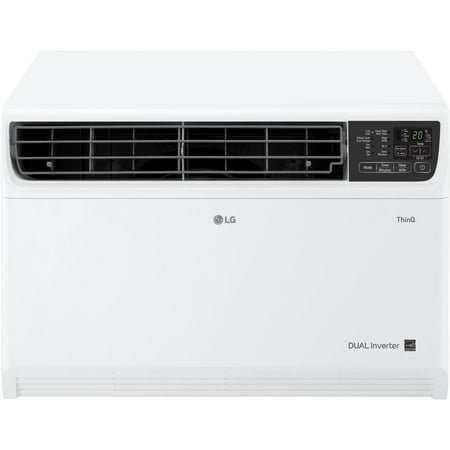
This is the one for big open-plan spaces that defeat smaller units – rated up to 700 sq ft. What got me is how the dual inverter keeps it quiet and fairly efficient despite all that power. Wi-Fi control included. Grab it at Walmart.
How to cool your home without an air conditioner
In short: No AC? No problem, honestly. A strong circulating fan or a swamp cooler will move air and take the edge off the heat for pennies compared to an AC. A few favourites below.
People forget this in their rush to buy an AC: in dry heat or a milder summer, a good fan or evaporative cooler does most of the job for a tiny fraction of the running cost. No install, no big electric bill, and the new ones are smart and surprisingly powerful. If AC feels like overkill or your climate is dry, these are great ways to cool your home for less. Start here.
Shark TurboBlade Bladeless Tower Fan
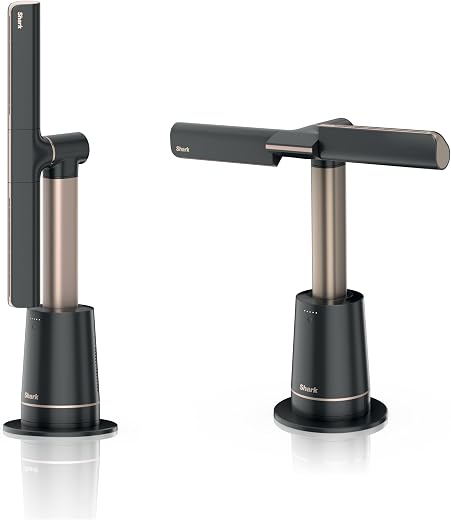
In short: The Shark TurboBlade bends and twists to throw air literally anywhere – up, down, across the room. If you want total control over where the breeze goes, this is the fan.
This is the most adjustable fan on the list by a mile. The bladeless head pivots and twists so you can aim it up at the ceiling, down at the couch, or sweep it across the whole room with the 180° oscillation. Ten speeds and ten separate noise levels mean you can have a gentle whisper at night or a proper gale on a hot afternoon. And with no exposed blades, wiping it clean takes seconds – no more unscrewing a grille to get at years of dust.
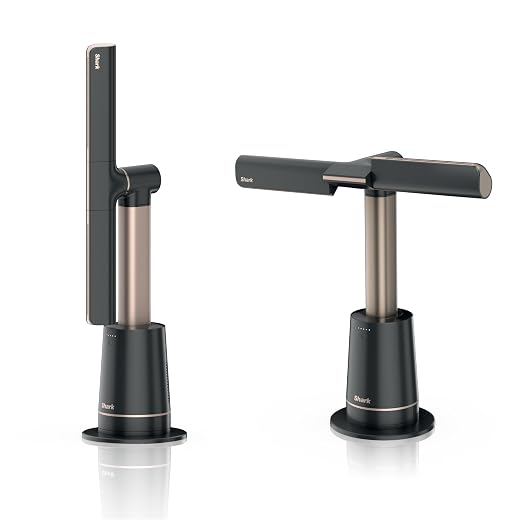
The most adjustable fan here by a long way – the bladeless head pivots and twists to aim air up, down or across the room, and sweeps 180°. Ten speeds, ten noise levels, and no blades to unscrew when it’s time to wipe off the dust.
DREO Evaporative Swamp Cooler
In short: The DREO swamp cooler blows actually-cold air using water and ice packs. In dry heat it’s the closest thing to AC without the AC bill.
Swamp coolers work on a simple trick – blow air across water and it comes out cooler. The DREO does it well. The 2026 version stands 43 inches, swings 80° side to side, and comes with ice packs you can drop in to push the air even colder. App control, four speeds, four modes, a 12-hour timer. The catch worth knowing: these shine in dry climates and do less in humid air, since they add a bit of moisture. But where it’s dry, it’ll drop the temperature for a fraction of what an AC costs to run.

Blows genuinely cold air by passing it over water, and the ice packs push it colder still. Stands 43 inches, swings 80°, runs from an app, four speeds, 12-hour timer. Brilliant in dry heat for a fraction of an AC’s running cost – less so in humid air.
Vornado 753 OSC Whole Room Air Circulator
In short: The Vornado doesn’t just blow at you – it churns the whole room’s air into a circulating vortex, which evens out the temperature and makes the entire space feel cooler. Different, and it works.
Vornados work differently from a normal fan. Instead of a straight blast at your face, they spin the whole room’s air into a circulating vortex, so the temperature evens out and the entire space feels cooler rather than just the spot you’re sitting in. The 753 OSC adds oscillation, an auto mode, a remote, three speeds, and even aromatherapy scent pads if you want the room to smell nice too. The grille pops off for cleaning. To cool your home’s air evenly rather than aim a breeze at one chair, it’s excellent.

Doesn’t just blow at you – it churns the whole room’s air into a vortex so the temperature evens out and the entire space feels cooler. Oscillates, has an auto mode and remote, three speeds, and even scent pads if you want the room to smell good too.
DREO Smart Pedestal Fan
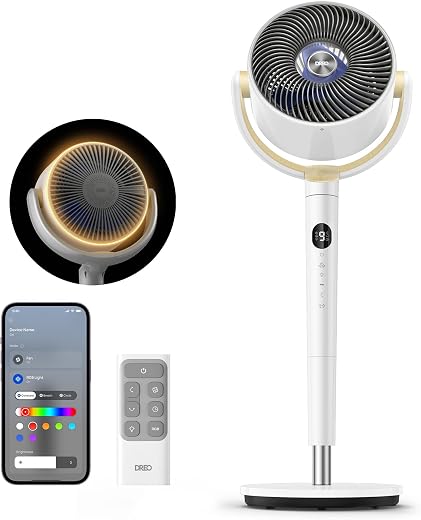
In short: The DREO pedestal fan runs at a whisper – 20dB – while throwing air 100ft and oscillating in every direction. Built for sleeping through, basically.
This one’s made for the bedroom and it shows. It oscillates both ways – side to side and up and down, 120° each – so the breeze actually reaches the whole room instead of one corner. It reaches up to 100ft, and the headline number is the 20dB noise level, which is quiet enough that it genuinely won’t wake you. Nine speeds, six modes, an 8-hour timer so it shuts off after you’ve fallen asleep, plus an RGB light and full Wi-Fi and Alexa control. For a quiet bedroom fan you can set and forget, it’s hard to beat.

Made for the bedroom – it oscillates both side-to-side and up-and-down so the breeze reaches the whole room, throws air 100ft, and runs at a barely-there 20dB. Nine speeds, six modes, an 8-hour timer to shut off after you doze off, plus Wi-Fi and Alexa.
Quick recap – how to cool your home by room
If you’ve skimmed your way down here, no judgement – here’s the short of it. Got a little bedroom around 150 sq ft? The LG 5,000 BTU and nothing bigger. Renting or fighting with awkward windows? The BLACK+DECKER portable that just rolls in. A medium bedroom you want quiet and smart? That’s the Windmill 8,000 BTU.
Move up to a proper living room near 450 sq ft and the Midea U-Shaped 10,000 BTU is the quiet, efficient pick. For a big open-plan space pushing 700 sq ft, only the LG 14,000 BTU has the muscle. And if you’d rather skip AC entirely, the DREO swamp cooler, the Vornado circulator, the Shark TurboBlade and the DREO pedestal fan all move serious air for a fraction of the running cost – the swamp cooler especially, as long as your climate runs dry.
How many BTUs do I need to cool my home by room size?
Easy maths: roughly 20 BTU per square foot. So a small 150 sq ft bedroom wants about 5,000 BTU, a 350 sq ft room around 8,000, a 450 sq ft living room about 10,000, and a big 700 sq ft open space around 14,000. Bump it up a bit if the room gets a lot of sun, has high ceilings, or is a kitchen, and dial it down for a shaded room. It’s not an exact science, but it gets you close.
What happens if my air conditioner is too big for the room?
This is my freezing-but-clammy mistake exactly. An oversized AC cools the air so fast it switches off before it has time to pull the humidity out, so you end up cold and weirdly damp at the same time. It also clicks on and off constantly, which wastes power and wears the thing out early. Honestly, matching BTU to room size matters way more than buying the biggest unit you can afford.
Can I cool my home without an air conditioner?
Definitely, particularly if your air is dry or the heat is mild. A circulating fan like the Vornado stirs the whole room’s air so it feels cooler, and an evaporative cooler like the DREO genuinely lowers the temperature using water and ice packs. They cost next to nothing to run and need no installation. The one catch is they’re happiest in low humidity – in muggy air, evaporative coolers lose their edge.
Are inverter air conditioners worth it?
In my opinion, yes. Inverter ACs like the Windmill, Midea and LG ones smoothly adjust their compressor speed rather than just slamming on and off, which makes them much quieter and a lot more efficient – Midea reckons around 37% savings. They do cost a little more upfront, but you make it back on the electric bill, and the quietness alone is worth it in a bedroom where a clunky on-off unit would keep waking you.
What is the quietest way to cool a bedroom?
For an AC, the Midea U-Shaped is the champ here – its shape literally puts the noisy compressor outside the glass – and the Windmill’s WhisperTech is close behind. If you’re skipping AC, the DREO pedestal fan runs at a barely-there 20dB. The thing to look for in a bedroom is either an inverter AC or a fan with a low decibel rating, so the hum doesn’t end up being the thing that keeps you awake.
Check all current prices on Amazon and Walmart – AC and fan prices climb as summer heats up, so buying early in the season usually saves money.
Also check my posts on Cooling Beauty Products for Instant Heat Relief and Best Cooling Towels in 2026 for more ways to beat the heat.
That’s the room-by-room way to cool your home in 2026. Measure the room, do the quick BTU math, and match the unit to the space – not the other way round. Get the sizing right and you’ll cool your home faster, more comfortably, and for far less money all summer.
 Amazon.com
 Amazon.com
 Amazon.com
 Amazon.com
 Amazon.com
 Walmart.com
 Amazon.com